


A 2025 data from the National Center for Missing and Exploited Children (NCMEC) released data showing a significant increase in reports related to online enticement, financial sextortion, AI-enabled exploitation, and child sex trafficking. Importantly, NCMEC has noted that much of this increase reflects expanded mandatory reporting requirements under the REPORT Act, which took effect in 2024.
A child predator is an adult who seeks to exploit children for sexual, financial, or criminal purposes. Predators often target children aged 8–14, especially those who spend time online without supervision or face emotional challenges at home.
Predators exploit children in several ways:
- Human trafficking: Some predators recruit children to sell them or use them for labor or sexual purposes.
- Drug exploitation: Children may be manipulated into carrying or distributing drugs.
- Online grooming: Adults gain a child’s trust online to exploit them gradually.
Predators operate both offline , approaching children at parks, schools, or events, and online, through social media, games, or messaging apps. Understanding these patterns helps parents prevent potential harm.
Why Child Predator Awareness Matters
Child predator protection is more important than ever. Reports indicate that thousands of children are approached by predators each year, both online and offline. According to the National Center for Missing & Exploited Children, over 460,000 online enticement incidents were reported in 2023. Understanding what a child predator is, how they operate, and how to communicate safety measures can empower parents to protect their children effectively.
Online Predators and How They Target Children
Online predators use games, social media, and messaging apps to connect with children. They may:
- Pretend to be children or friendly adults.
- Offer gifts, money, or attention to build trust.
- Ask for personal information gradually, including home addresses or school details.
- Use fear or guilt to prevent children from telling adults.
A child safety seminar in Florida can help parents and children learn practical strategies to avoid these dangers, emphasizing real-life scenarios and prevention techniques.
Understanding How Predators Choose and Manipulate Children
Research and interviews with convicted offenders reveal that predators often look for specific behaviors and emotional traits in children. They tend to target children who appear friendly, trusting, quiet, or emotionally vulnerable. Children who are withdrawn, seeking attention, or less likely to speak up are often seen as easier to manipulate.
Predators focus on building trust first. They may give attention, gifts, or kindness to make the child feel special. Over time, they test boundaries slowly, watching how the child reacts, before crossing into inappropriate behavior. In many cases, they try to isolate the child, create secrecy, and make harmful actions seem normal or like a “game.”
Signs of Grooming to Watch For
Parents should be aware that predators often groom children gradually, making it hard to notice at first. Common signs include children becoming unusually secretive with their phones or devices, receiving unexplained gifts or money, or spending excessive time with a particular adult or online contact. Other warning signs are sudden changes in behavior, such as withdrawal, anxiety, or fear, talking about topics inappropriate for their age, or showing unusual attachment to someone new. If children express that certain interactions feel like “secrets” or make them uncomfortable, it’s important for parents to take it seriously and open a calm conversation.
Online vs. Offline Predators
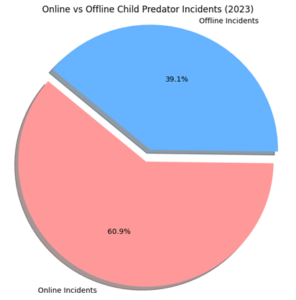
Predators can approach children both online and offline, using different methods:
| Type | How Predators Approach | 2023 Reported Incidents |
| Online | Social media, messaging apps, online games; pretending to be friendly adults or children, offering gifts or attention, asking for personal info | 186,819 (NCMEC CyberTipline) |
| Offline | Parks, schools, sports events; pretending to be friends, family, or trusted adults | ~120,000 (Law enforcement estimates) |
Online predators may:
- Pretend to be children or friendly adults
- Offer gifts, money, or attention to gain trust
- Ask personal questions gradually
- Use fear or guilt to prevent disclosure
Offline predators may:
- Approach children in public spaces
- Pretend to be a parent, teacher, or friend
- Offer help or treats to lure children
Real-Life Examples and Insights
- Case Study 1: In 2023, a Florida mother discovered her 12-year-old had been communicating with an adult online offering money for personal photos. Law enforcement intervened after noticing suspicious messaging patterns.
- Case Study 2: A 10-year-old in Texas was approached at a park by someone pretending to be a friend’s parent. Quick reporting and discussion at home prevented further interaction.
Some news stories for reference –
https://www.kwtx.com/2025/10/17/bryan-man-arrested-city-park-accused-trying-meet-child-sex/?
Protecting Children: A Recent Birmingham Case
In February 2026, Said Daauud, a former IT worker at a Birmingham mosque, was jailed for 16 years for a campaign of sexual abuse and grooming against boys as young as nine.
Daauud gained the children’s trust by giving sweets, AirPods, games, and phones, and then abused five boys over time. He used messaging apps like WhatsApp and Snapchat to manipulate one boy into sending indecent images, sending over 4,000 messages in the process.
Following a trial at Birmingham Crown Court, he was found guilty of rape, sexual assaults, and inciting sexual activity. He will also remain on licence for five years after his release and is subject to sexual harm prevention and restraining orders.
Joseph from Crime Stoppers Global Solutions emphasizes:
“Parents need to talk openly, without fear or shame. Awareness and early intervention are key to protecting children from predators.”
How to Talk to Your Child About Safety
It can feel challenging to discuss predators, but approaching the topic calmly, positively, and repeatedly helps. Start early, use simple language, and create an environment where children feel safe to ask questions.
Key steps for talking with your child:
- Use clear and simple words: Avoid complex terms; explain that some adults may try to trick kids.
- Explain private vs. public: Teach that certain body parts are private, and no one should touch or photograph them.
- Create a safe signal: Agree on a word or signal your child can use if they feel unsafe.
- Discuss online safety: Warn against sharing personal information, meeting online friends in person, or responding to strangers.
- Practice scenarios: Role-play situations where a child might be approached, and guide safe responses.
- Encourage open communication: Make sure the child knows you are always available to listen without judgment.
Tools and Strategies for Parents
- Create a safe environment: Make your home a place where children can share worries freely.
- Monitor digital activity: Use parental controls and maintain conversation rather than strict surveillance.
- Teach children assertiveness: Empower them to say “No” and seek help when uncomfortable.
- Stay updated: Attend child safety seminars Florida and follow trusted resources for updated guidance.
Workshops & Seminars
- Attend child safety seminar Florida for hands-on guidance.
- Look for webinars, community programs, or NGO-led initiatives.
- Connect with organizations for resources and support.
Legal Info & Reporting
This section informs parents and guardians about their rights and the steps to take if a child is being targeted or abused. It includes reporting incidents to law enforcement, contacting child protection agencies, and understanding legal actions such as restraining orders or prosecutions against offenders. Knowing the proper channels ensures timely intervention, protects the child, and holds predators accountable under the law.
Support & Counseling
Support and counseling provide children and families with professional help to cope with the trauma of abuse or grooming. Trained counselors can guide children in expressing their feelings safely, rebuild trust, and develop healthy coping strategies. Parents also receive guidance on how to support their child emotionally and create a safe environment at home.
Take Action
Every small effort helps. Your $10 helps stop a crime and supports programs that protect children from predators, provide counseling, and raise awareness in communities.
Conclusion
Talking about predator safety may feel uncomfortable, but early, honest, and calm discussions equip children to protect themselves. By understanding how predators operate, monitoring online activity, and practicing open communication, parents can build child predator protection habits that last a lifetime. Attending workshops like child safety seminar Florida can reinforce these lessons, making both children and parents more confident in navigating potential risks.
FAQs About Child Predator Protection
- How do I know if my child is being targeted online?
Signs include secretive behavior with devices, sudden changes in friends, or receiving gifts/messages from strangers. - What age should I start talking about predators?
Even as early as 5–6 years old, use age-appropriate language about safety and private boundaries. - How can I protect my child on social media?
Set privacy settings, limit contact with strangers, and discuss safe sharing practices. - Are predators only online?
No, many predators approach children in public places like parks, schools, or sports events. - Where can I get more help and guidance?
Organizations like Crime Stoppers Global Solutions offer resources, tips, and community support for parents and guardians.